
Tracking household spending: shared money vs personal money
Money fights at home are rarely about the numbers. They come from each person expecting something nobody said out loud. One thinks the electricity bill is split in half, the other thinks whoever has time pays it. This guide does not claim there is one right way to divide money. It helps you and the people you live with talk about it, choose what suits your home, and keep the same picture of where the money goes.

What to talk about before you track together
Tracking together starts with a conversation, not an app. Give half an hour to these three questions.
- Which costs belong to the household? For example rent, water and electricity, internet, household supplies, and groceries you cook together.
- How much does each person put in? Equal shares, shares in proportion to income, or each person covering certain bills.
- What is personal to each of you? Hobbies, gifts for others, money sent to your own parents, none of which needs reporting baht by baht.
There is no answer that is right for every home. What matters is that both of you know and agree to the same rules.

Three common ways to divide money
1. One pot
Everyone’s income goes into one shared pot and everything is paid from it. It is simple and gives a clear overall view. The downside is that someone may feel they have no money of their own to decide on, and if incomes differ a lot it can feel unfair without anyone intending it.
2. Fully separate, split only some things
Each person has their own account and pays their own way, and you settle up for rent or electricity. You get independence, but you have to keep track of who paid first and who has paid back, and unclear leftovers pile up.
3. Shared pot plus personal money
Each person transfers an agreed amount into a shared pot that pays for the household, and keeps the rest as their own, to spend without explaining. Many couples and families who live together choose this because it balances openness with privacy. You still need to agree clearly on what the pot covers.
What should the shared pot cover?
Start from this list and add or cut for your home: housing (rent, mortgage, building fees), water, electricity, internet, household supplies, groceries you share, children’s costs, and things bought for the home together. Personal items usually include clothes, hobbies, each person’s coffee, gifts for friends or relatives, and surprises for each other, which should not have to appear in the shared list.
For grey areas, such as eating out together or a gift for your partner’s parents, agree once which pot it belongs to and keep doing it that way. Small things nobody settled tend to turn into big things later.
Small rules that keep it working
- A ceiling you tell each other about. For instance, agree an amount above which you mention a purchase first. Pick a number that suits your home.
- A monthly money check-in. Twenty minutes after month end, look at the numbers together and adjust the pot if needed. It is not a time to find who is at fault.
- Numbers are information, not accusations. “Food was higher than we expected this month, shall we look?” works better than “why did you spend so much?”
- Personal does not mean secret. If one person’s personal spending starts affecting the shared pot, say, because of debt repayments, it is worth discussing, without opening every entry.
Keeping the records without a burden
Shared tracking often fails because one person becomes the household secretary, typing every entry and asking the other what each one was. Instead, let each person log what they paid, and mark each entry as shared or personal. With a notebook or spreadsheet, use two tabs: a shared tab both of you see, and a personal tab each person keeps. If you use an app, choose one that separates the two in the app itself.
How to do it in Sati
Sati has a Shared account (an income and expense account you share with others in the app, not a bank account) alongside your personal account, which fits the shared pot plus personal money approach.
- Invite people. Invite your partner or family into the Shared account with an invite code.
- Shared or personal. Entries you share are visible to everyone in the Shared account. Entries set as personal are visible only to their owner, so other members do not see your personal entries.
- Switch views. Switch between “Personal” and “Shared” with one tap.
- Move entries. You can move entries between personal and shared.
- Separate budgets. Set a budget for the Shared account and a personal budget for yourself.
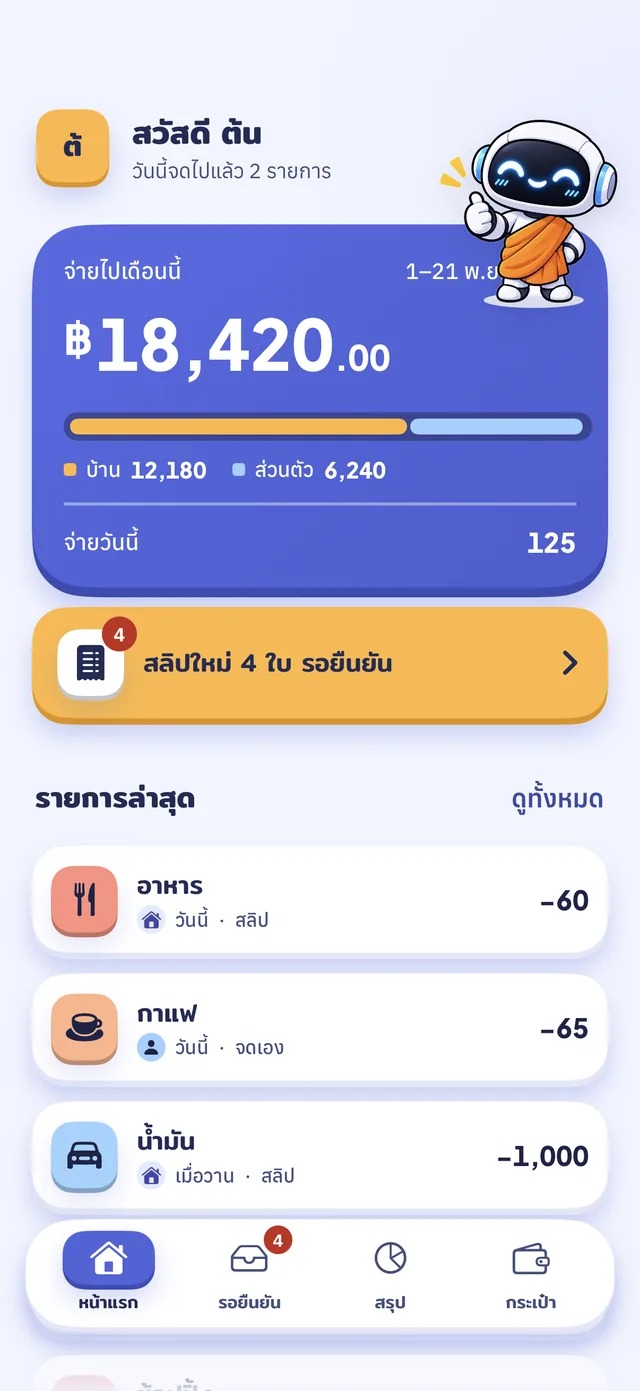
Sati is an iPhone app, free to start, and not on the App Store yet; it is coming soon. See the Shared account overview in Features, how slips are logged on How it works, and questions like “Can members of my Shared account see my personal entries?” in the FAQ.
Was this article helpful?
Tell us in one tap how it went. We use it to improve the article.